Moving to Jacksonville, Florida: Here's what to expect
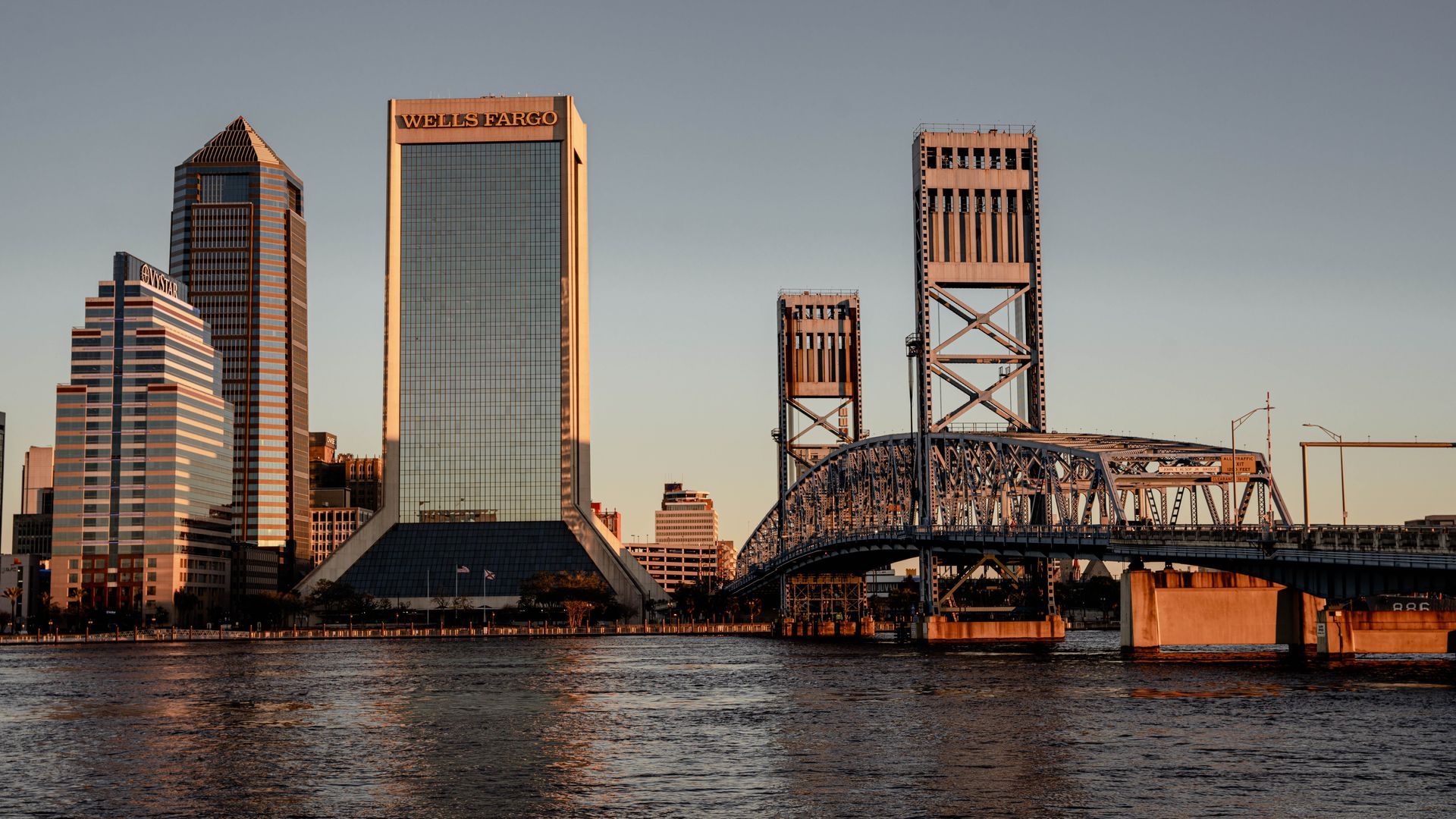
Jacksonville is the largest city by land area in the lower 48 states, sprawling across 767 square miles of beaches, rivers, neighborhoods, and naval bases. Most newcomers expect a beach town and find something closer to a quietly ambitious metro: nearly 1,032,000 residents, a working port, a Navy footprint, a healthcare industry that anchors the economy, and 22 miles of Atlantic coastline that residents treat as a backyard.
The city pulls a steady stream of relocators from the Northeast and Midwest looking for warmer weather, no state income tax, and housing costs that still feel reasonable in a Florida that has gotten dramatically more expensive. It also pulls military families, healthcare workers, logistics professionals, and remote workers priced out of South Florida. If you are weighing a move, the best approach is to look honestly at the numbers, understand the rhythms of life here, and decide whether the trade-offs work for you.
What follows is a practical look at what Jacksonville is actually like to live in. Cost of living, housing, weather, commuting, schools, and the lifestyle realities that nobody mentions until you have already signed a lease. Storage comes up because it has to. With this much square footage and this many beaches, garages fill up fast.
The big picture: who moves here and why
Jacksonville is growing at about 1.41% per year, with the city up roughly 8.4% since the 2020 Census. The metro area is closing in on 1.36 million people and continues to attract residents from higher-cost markets.
What that growth looks like on the ground is a city absorbing newcomers in waves. Healthcare workers chasing roles at Baptist Health and Mayo Clinic. Sailors and their families cycling through Naval Station Mayport and NAS Jacksonville. Remote workers from New York, New Jersey, and Illinois trading state income tax for sunshine. And a lot of younger buyers who could not crack the markets in Orlando, Tampa, or Miami.
The takeaway is that Jacksonville does not have one dominant identity. The Westside feels like working-class suburbia. San Marco feels like a walkable cafe district. Mandarin feels like riverfront family territory. Atlantic Beach feels like a separate town entirely. Where you land determines what your version of Jacksonville actually looks like.
What it costs to live here
Jacksonville is consistently cheaper than the national average, which is a big part of the appeal. Cost-of-living indexes put the city at roughly 98 compared to the U.S. baseline of 100, and other measures show it running closer to 8% under the national average. For 2026, a single person spends about $2,501 per month on basic living expenses, while a family of four runs around $5,507.
The line items break down in your favor more often than not. Housing costs come in roughly 20% below the U.S. average. Utilities run about 9% cheaper. Healthcare is 17% less expensive. The one place the math works against you is groceries, which run about 5% higher than the national average, partly because of the cost of trucking food into Florida.
Taxes are where Florida really earns its reputation. There is no state income tax, and the combined sales tax in Jacksonville is 7.5%, made up of 6% state and 1.5% Duval County. Property taxes are also low for a major Florida city. The millage rate of 17.0303 is one of the most modest among large Florida cities, and the homestead exemption for 2026 sits at $51,411 after voters approved annual inflation adjustments in 2024.
The housing market in plain English
Jacksonville housing has cooled from its pandemic peak but remains competitive. The median home price is sitting around $300,000 to $369,000 depending on which dataset you trust and which slice of the market you are looking at. Inventory is at about 3.9 months, which still favors sellers, and well-priced homes are moving in roughly 36 days.
Rent varies widely by neighborhood. A one-bedroom downtown averages around $1,082, while more affordable corridors like the Westside, East Arlington, and Orange Park keep one-bedroom rents under $1,600. The Northside ZIP code 32218 holds steady around $1,676 in median rent. If you are coming from a coastal Northeastern market, those numbers will feel like a rounding error. If you are coming from rural Georgia or the Midwest, they will feel like a stretch.
Choose your neighborhood with care because the city is enormous and your daily life will be shaped by where you land. The Westside, where many newer arrivals settle for affordability and military proximity, is built around suburban streets and easy access to Naval Air Station Jacksonville and the Cecil Commerce Center. Areas like Mandarin lean upscale-family. San Marco, Riverside, and Avondale offer historic homes and walkable districts. The Beaches communities are their own coastal universe.
Getting around: traffic, distance, and the I-95/I-295 reality
Commuting in Jacksonville is better than its reputation suggests. The average commute is 24.6 minutes, which is roughly two minutes shorter than the U.S. average of 26.4. The city's size keeps congestion lower per capita than you would expect from a metro this big, because traffic disperses across a sprawling geography.
Rush hour does pinch in the predictable places. Mornings from about 7:00 to 8:30 a.m. and evenings from roughly 4:30 to 6:30 p.m. push volume onto I-95 and I-295, which form the spine of how most people move through the city. If your commute crosses either interstate during those windows, plan accordingly. Outside of peak hours, getting around is generally painless.
Public transit exists but should not drive your decision about where to live. The Jacksonville Transportation Authority runs buses, and the Skyway people mover connects parts of downtown across the river. For most residents, owning a car is functionally required. Jacksonville is a driving city, and that shapes everything from grocery runs to how you plan your weekends.
Weather, hurricanes, and the storage conversation that comes with them
Jacksonville's weather is a major part of the appeal: warm, sunny, and ocean-adjacent for most of the year. The trade-off is hurricane season, which runs from June 1 through November 30, with the peak threat window from mid-August through late October. Jacksonville's geography offers some protection from direct hurricane hits, but the city has had some painful brushes. Hurricane Matthew in 2016 and Hurricane Irma in 2017 both caused significant flooding without making direct landfall here, and Irma produced the highest downtown floodwaters ever recorded in Duval County.
Flood risk varies block by block. Of the 331 census tracts in Jacksonville, 91 have a majority of buildings facing significant risk from storm surge, high tide flooding, or surface flooding. Before you sign on a house, check the FEMA flood map for your specific address and ask about flood insurance pricing. Inland neighborhoods like the Westside and Mandarin are generally less exposed than properties closer to the St. Johns River or the Intracoastal.
This is also where storage starts to enter the picture in a practical way. Hurricane prep often means clearing patios and garages of anything that could become a projectile, and a lot of Jacksonville residents end up with seasonal gear, kayaks, paddleboards, and outdoor furniture that need a home outside the house. A climate-controlled unit also matters more here than in drier climates because Jacksonville humidity is brutal on electronics, leather, wood furniture, photographs, and anything with adhesive. Garage storage that survives a Midwestern winter will not survive a Florida summer.
The economy and what people actually do for work
Jacksonville's economy is more diverse than most Sun Belt cities of its size. Healthcare is the heavyweight, with Baptist Health employing around 12,000, Mayo Clinic at roughly 8,450, and Florida Blue at 5,700. The military adds another massive layer through NAS Jacksonville (around 22,000) and Naval Station Mayport (15,150 active duty plus about 32,000 family members). CSX Corporation, the railroad giant, is headquartered downtown.
The job market itself has been a quiet bright spot. The Wall Street Journal ranked Jacksonville the third-hottest job market in the country in 2023, and growth projections suggest the metro's job base will expand 44.4% over the next decade, compared to the U.S. average of 33.5%. Average salaries fall in the $58,000 to $70,000 range, which is consistent with the
$69,872 median household income figure.
Construction and healthcare alone are projected to drive more than half of economic growth over the next ten years. Logistics, financial services, and tech are growing as well, supported by the deep-water port and the city's geographic position as a Southeast hub. If you have flexibility in your career and can work remotely or in healthcare, finance, or logistics, Jacksonville is genuinely friendly to professional relocation.
The military piece, and why it matters even if you are not in the Navy
Jacksonville is one of the largest Navy towns in the country. Between NAS Jacksonville, Naval Station Mayport, and the smaller installations around the area, the military presence shapes a lot of how the city works. Mayport alone is the third-largest naval surface fleet concentration area in the United States, with a harbor that can hold 34 ships.
If you are PCS-ing here, your move logistics look different from a typical civilian relocation. Sea bags, deployment cycles, dependents shuffling households, and frequent turnover all factor in. Storage often becomes essential during deployments, and many military families lean on month-to-month rentals so they can stage belongings without locking into long contracts. The Westside is especially popular with Navy families because of its proximity to NAS Jacksonville and the housing options that come at lower price points than the Beaches.
For everyone else, the military presence shows up in subtle ways. The job market is steadier than it would otherwise be. The healthcare network is large. There are family-oriented neighborhoods built around school zones favored by military households. And there is a cultural respect for service that is woven into a lot of community events, sports broadcasts, and local businesses.
What people actually do here on weekends
The Jacksonville lifestyle is built around water. The city sits on the St. Johns River, the longest river in Florida at 310 miles, and stretches along 22 miles of beaches. Boats, paddleboards, fishing rods, surfboards, and beach cruisers are not hobbies here so much as standard household equipment. The Atlantic, Neptune, Jacksonville, and Mayport beach communities each have their own personality, and inland residents make the 17-mile drive from downtown out to the coast routinely.
Beyond the water, there is a Jacksonville Zoo and Gardens, a strong arts scene in Riverside and downtown, NFL football with the Jaguars, and a dining culture that has grown sharply over the last decade in San Marco, Avondale, and the Beaches. The Cecil Recreation Complex on the Westside, built atop a former military base, includes more than 2,000 acres of equestrian facilities, tennis courts, a golf course, and an Olympic-sized indoor pool.
All of this gear adds up. Surfboards do not fit in apartments. Kayaks do not fit in coupes. Coolers, beach chairs, fishing tackle, and bicycles take up real space, and when hurricane season arrives you need somewhere to put the patio furniture and the grill. Climate-controlled storage is the unglamorous backbone of how a lot of active Jacksonville households actually function.
What it costs to actually get here
Moving costs vary wildly based on distance and how much you bring. A long-distance move from out of state to Jacksonville typically falls between $2,500 and $5,000 for a one-bedroom household over 1,000 miles, and between $6,000 and $11,000 for a four-bedroom. Cross-country moves can run as high as $17,700 for larger households.
Long-distance pricing is based on weight and miles, which is why decluttering before you move can save real money. Cutting $100 to $200 off a shipment is common just by donating or selling things you would otherwise haul south. Local intra-city moves once you arrive run hourly and are far less expensive.
The hidden cost a lot of newcomers miss is timing. A one-bedroom in your old city might fit in your new place, but a four-bedroom suburban house with a basement does not always translate to Florida architecture. Garages are smaller. Basements do not exist. Attics are storage death traps in the humidity. Many new arrivals find themselves looking for extra space within weeks of unloading the moving truck.
A practical first month plan
Before you arrive, settle the basics. Get your Florida driver's license within 30 days of establishing residency, register your vehicles in Duval County, and update your homestead exemption paperwork if you are buying. Set up flood insurance quotes for your address even if your lender does not require it. Florida flood maps are updated frequently and a neighboring street's classification does not necessarily apply to yours.
Get familiar with the geography quickly. Jacksonville is too big to learn by accident, so map the routes between your home, your job, your school zones, and the beaches before you fall into bad habits. Identify your nearest grocery, gym, hospital, and pharmacy in the first week. Build a hurricane kit before August. Local hardware stores sell out of essentials when storms approach, and waiting until a named storm is forming is the wrong time to start shopping.
Honestly assess your storage situation. If you are moving into a house with a garage, take an inventory of what you actually need year-round versus what stays in seasonal rotation. Holiday decor, off-season clothes, sports gear, business inventory, and anything fragile in Florida humidity all benefit from a climate-controlled unit. The cost is usually less than the price of repeatedly replacing things ruined by heat and humidity.
Ready to make the move?
When you arrive in Jacksonville, the first reality you face is space. Closets fill, garages disappear under hurricane prep gear, and the boat or kayak you swore you would buy after seeing the St. Johns becomes a real consideration. That is where ClearHome Storage at 6664 Firestone Rd on the Westside comes in. The facility offers climate-controlled units in Jacksonville that protect electronics, furniture, and seasonal items from Jacksonville's humidity, drive-up access for easy loading, vehicle, boat, and RV parking, and month-to-month rentals that fit the pace of relocation.
Whether you are PCS-ing through Naval Air Station Jacksonville, settling a family into a new Westside home, running a business that needs flexible inventory space, or just trying to keep the garage usable through hurricane season, having a dependable storage option close by makes the transition far easier. With access hours from 6 a.m. to 10 p.m. seven days a week, on-site moving truck rentals, boxes and packing supplies, online rental and autopay, and 24-hour security including cameras, alarms, coded gates, and perimeter fencing, the Firestone Rd facility is built for the way real people actually move into and live in Jacksonville. Call (904) 243-9195 or reserve online to get set up before the truck rolls in.